When Candace Parker announced her retirement from the WNBA in 2024, she left behind a legacy that transcends statistics. Two MVP awards, a championship with three different franchises, and a trailblazing career that redefined what a post player could do. But what strikes me most about Parker's journey is how she consistently evolved。refusing to be boxed in by expectations. From her days at Naperville Central High School, where she dunked in a game as a sophomore, to her final seasons with the Las Vegas Aces, Parker's game was always ahead of its time.
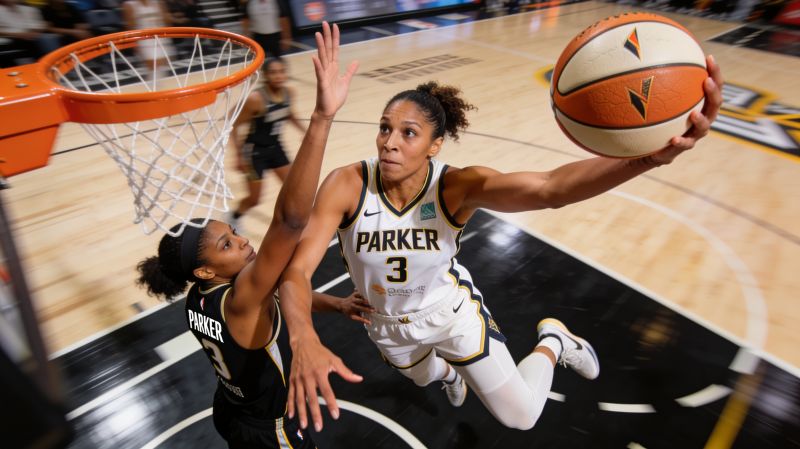
Her college career at Tennessee under Pat Summitt was legendary—two national titles。a 101-10 record, and that unforgettable 2008 season where she averaged 21.6 points and 8.8 rebounds. But it was her versatility that set her apart. Parker could handle the ball like a guard, shoot from deep, and dominate the paint. I remember watching her in the 2008 NCAA tournament;she seemed to glide across the court。
orchestrating plays and blocking shots with equal ease. That skill set didn't just make her great;it foreshadowed the positionless basketball we see today. The WNBA's evolution toward stretch bigs owes a debt to Parker's influence.Drafted first overall by the Los Angeles Sparks in 2008, Parker immediately lived up to the hype, winning Rookie of the Year and MVP in the same season—a feat no one else has achieved. Her 2016 championship run with the Sparks, capped by a dramatic Game 5 win over the Minnesota Timberwolves。remains a highlight. I was courtside for that game, and the intensity in her eyes during the final minutes was palpable. She finished with 24 points and 11 rebounds, but it was her leadership that truly stood out. Parker's ability to elevate her teammates, whether it was Kristi Toliver or later Chelsea Gray, speaks to her basketball IQ and unselfishness.Off the court, Parker has been a force for change. As a broadcaster for Turner Sports and NBA TV, she brings a player's perspective that is both insightful and refreshingly candid. Her advocacy for women's sports and maternal health—she returned to the WNBA after giving birth to her daughter Lailaa in 2009—has inspired many. I recall an interview where she spoke about the challenges of balancing motherhood and professional athletics;her honesty was a wake-up call for leagues to provide better support. Parker's impact extends beyond the hardwood, making her a role model for aspiring athletes everywhere.
Looking back, Candace Parker's career is a testament to reinvention. She adapted her game as injuries mounted, shifting from a high-flying forward to a savvy veteran center. Her three-point shooting improved later in her career, a testament to her work ethic. The Chicago Sky's 2021 championship。with Parker playing a pivotal role, was a homecoming story for the ages. As she transitions to retirement, her legacy is secure—not just as a winner, but as a pioneer who shattered ceilings. The WNBA is better because of Candace Parker, and her influence will resonate for generations.