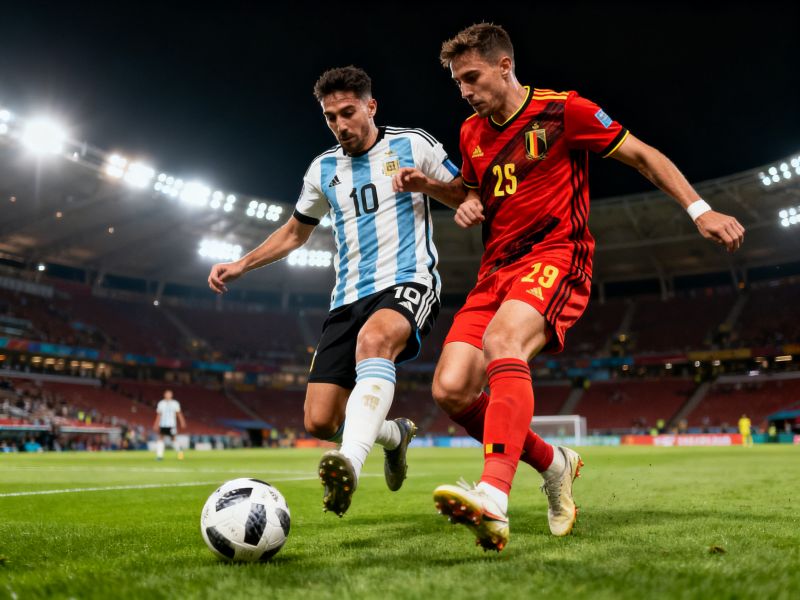
he Copa América doesn't do sentimentality. It does heat, grudges。and the kind of defending that leaves stud marks on shins. I watched the 2019 final in a São Paulo bar packed with locals, and when Everton Soares scored, the room erupted not with joy but with a sort of grim satisfaction—as if the South American Cup had finally delivered the only result that made sense. That's the tournament's real texture: a 100-year-old competition that treats every match like a border dispute.Look at the numbers. Thirteen nations, no fixed host, and a scheduling rhythm that has swung from every two years to every four and back again. CONMEBOL has invited guests from Asia and North America—Japan in 1999。Qatar in 2019—and each time the South American Cup absorbed them into its logic of survival. The 2019 edition in Brazil featured nine goals in the group stage from set pieces alone, a statistic that tells you more about the tournament than any possession chart. Teams don't come to play;they come to endure. The altitude of La Paz, the humidity of Manaus, the uneven pitches of smaller venues—these are not bugs but features of a competition that has always been a test of adaptability as much as skill.I still think about the 2015 quarterfinal between Chile and Uruguay at Estadio Nacional. Chile won 1–0, but the match turned on a Gonzalo Jara provocation that got Edinson Cavani sent off. The South American Cup thrives on these small, ugly dramas. It's not a showcase for tiki-taka;it's a laboratory for gamesmanship。for time-wasting, for the dark arts that no European club manager would tolerate. And yet, the football is often gorgeous. Lionel Messi's 2019 free kick against the United States—wait, that was Copa América Centenario in 2016. Sorry, my memory blurs these tournaments. That's part of the point: the South American Cup comes around so often that it becomes a recurring fever, each edition bleeding into the last.
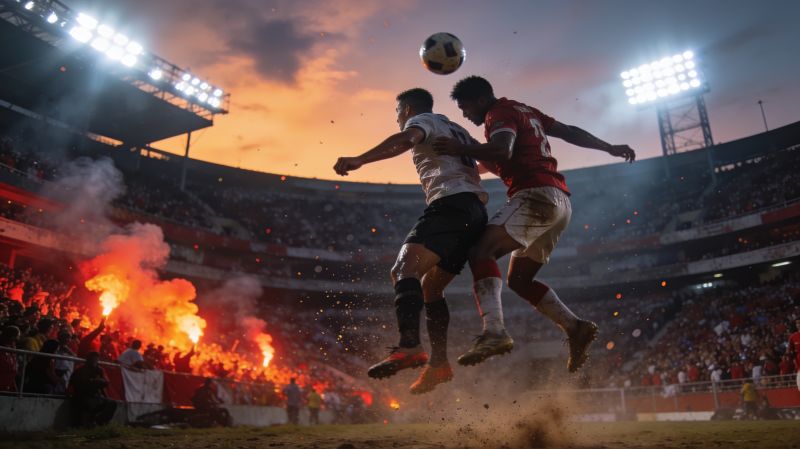
What stands out in recent years is the tactical drift. Tite's Brazil in 2019 won with a compact 4-2-3-1 and a midfield that pressed in short bursts—pragmatic, almost European. But then Argentina's 2021 triumph under Scaloni felt like a throwback: hard running, quick transitions。and a defensive line that sat deep and dared opponents to break them down. The South American Cup doesn't reward ideology. It rewards whoever can survive three weeks of travel, heat, and refereeing that ranges from lenient to chaotic. I recall a group-stage match in 2021 where Bolivia committed 22 fouls and received only two yellow cards. That's not incompetence;it's a different understanding of what the competition allows.
If you want to understand South American football's soul, skip the World Cup qualifiers. Watch the South American Cup. It's messier, more emotional, and somehow more honest. The crowd chants are louder。the touchline arguments more theatrical, the goals more likely to come from a defender's header off a corner than a 20-pass move. And when the final whistle blows, you don't get a coronation—you get a survivor holding a trophy that has been contested since 1916, back when the tournament was called the South American Championship. The name changed. The grit didn't.