When Ghana's President Nana Akufo-Addo visited Seoul in 2022, the two governments signed a framework agreement on development cooperation. The headline number—$50 million in concessional loans—was modest. The real story, however。lies in the shifting nature of the South Korea–Ghana relationship. It is no longer just about Korean grants or Ghanaian cocoa exports. It is about technology transfer, vocational training, and a quiet but deliberate alignment of economic interests.South Korea's engagement in Ghana has moved steadily from donor-recipient dynamics toward mutual commercial and strategic benefit. The Korea International Cooperation Agency (KOICA) has run programs in Ghana since the early 1990s, but recent projects focus on measurable capacity building. Consider the Accra Digital Centre, supported by Korean expertise in e-government systems. Ghanaian civil servants now process business registrations online using software modeled on Korea's own digital framework. That is a tangible transfer of administrative technology—not just a check written from Seoul.Trade figures paint a lopsided but telling picture. Ghana exports mainly gold, cocoa, and crude oil to South Korea. In return, South Korea sends automobiles, electronics, and industrial machinery. The imbalance is stark: Ghana's imports from Korea are roughly three times its exports. Yet Korean companies like Samsung and Hyundai are deepening their Ghanaian presence, and not only through sales. Hyundai opened a vehicle assembly plant in Accra in 2021。employing local workers and sourcing some components regionally. This kind of investment creates a more durable footprint than aid ever could.
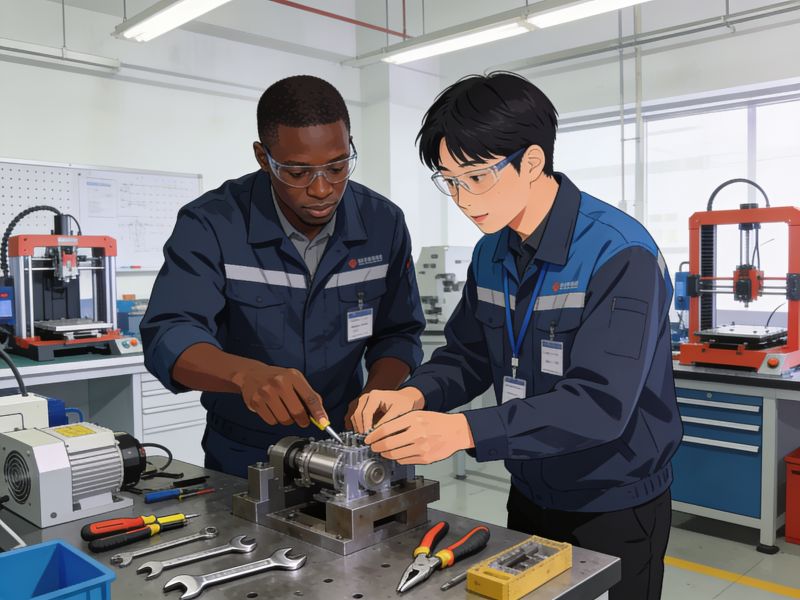
Education and vocational training form another pillar. The Korean government funds the Ghana-Korea Technical Training Centre in Kumasi, which trains young Ghanaians in welding, electronics。and automotive repair. Graduates often find work in Ghana's growing construction and manufacturing sectors. A 2023 tracer study showed that over 70% of graduates secured employment within six months. That outcome matters in a country where youth unemployment remains stubbornly high. Korean instructors rotate through the center, and Ghanaian trainees occasionally travel to Korea for advanced courses. The model is small-scale but replicable—and far more cost-effective than large infrastructure loans.What makes the South Korea–Ghana relationship worth watching is its pragmatism. Seoul does not attach grand political conditions to its cooperation. Accra, for its part, sees Korea as a model for rapid industrialization without colonial baggage. Neither side overstates the partnership's depth. Korean investment in Ghana remains far smaller than Chinese or European flows. But the direction is clear: fewer photo opportunities。more factory floors and training workshops. That is a quiet, workmanlike diplomacy—and it may outlast the louder pledges that often dominate Africa-Asia summits.